

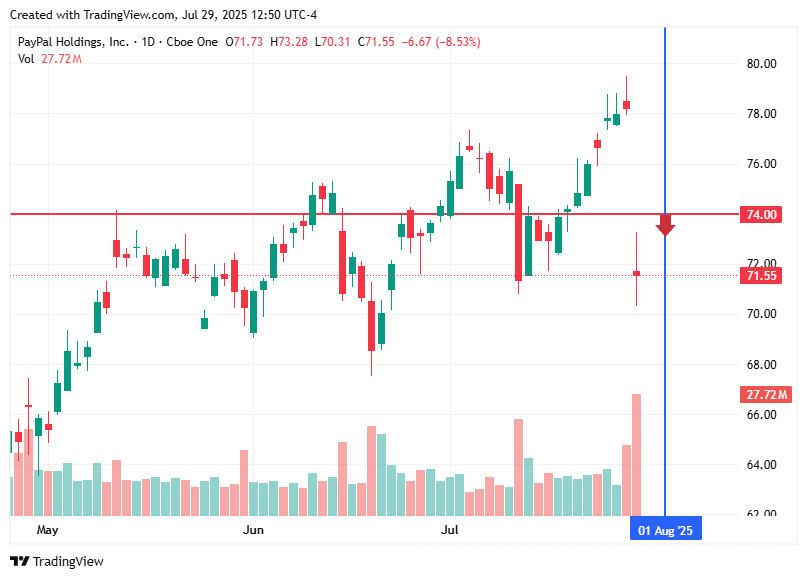
Spotted a high-probability setup on PayPal Holdings Inc (PYPL) after a sharp 9% sell-off on Monday, July 29 — triggered by disappointing earnings. The move came with heavy volume — more than 2x the 50-day average — and broke below the 50-day moving average with authority.
Setup Selection
This was a textbook reaction to a weak earnings release — a high-volume gap down, followed by failure to hold key support at the 50-day moving average.
With limited time to expiration and a clear resistance area overhead, the setup aligned well for a short-dated call credit spread — leaning into the breakdown.
Why Call Credit Spreads?
This trade structure allows collecting premium while keeping risk defined — ideal for scenarios where we expect limited upside after a breakdown.
💡 The core idea:
→ We don’t need the stock to collapse further.
→ We just want it to stay below a resistance level while time decay accelerates.
It’s a controlled-risk setup designed to benefit from recent weakness and fading bounce potential.
Trade Structure
Out of several configurations, this spread offered the best profile for a quick, tactical trade:
Expiration: August 1, 2025
Short Call: 74
Long Call: 78
Contracts: 17
Credit Received: $0.20
Max Profit: $320
Risk/Reward: 11.48%
Trade Executed
Position was opened late Friday, July 18.
Full structure and simulation available here:
👉 View the trade
Entry and Exit Plan
Entered the position on Tuesday, July 29 — after the earnings gap was confirmed and price showed no signs of recovery.
→ If PYPL stays under $74 and we capture most of the premium before Friday, we’ll close the trade early — no need to hold to expiration.
❤️ Support the Project
This Substack is free to read.
If you find value in the posts and want to support consistency,
you can do so 👉 by donating here 👈
Thanks for reading. Let’s build better trades.
Disclaimer
All content is for informational purposes only and does not constitute financial advice.Any trades or strategies should be tested in a simulated environment before use.Trading involves risk, and all decisions are the sole responsibility of the reader.